
Outsourcing Our Intelligence™
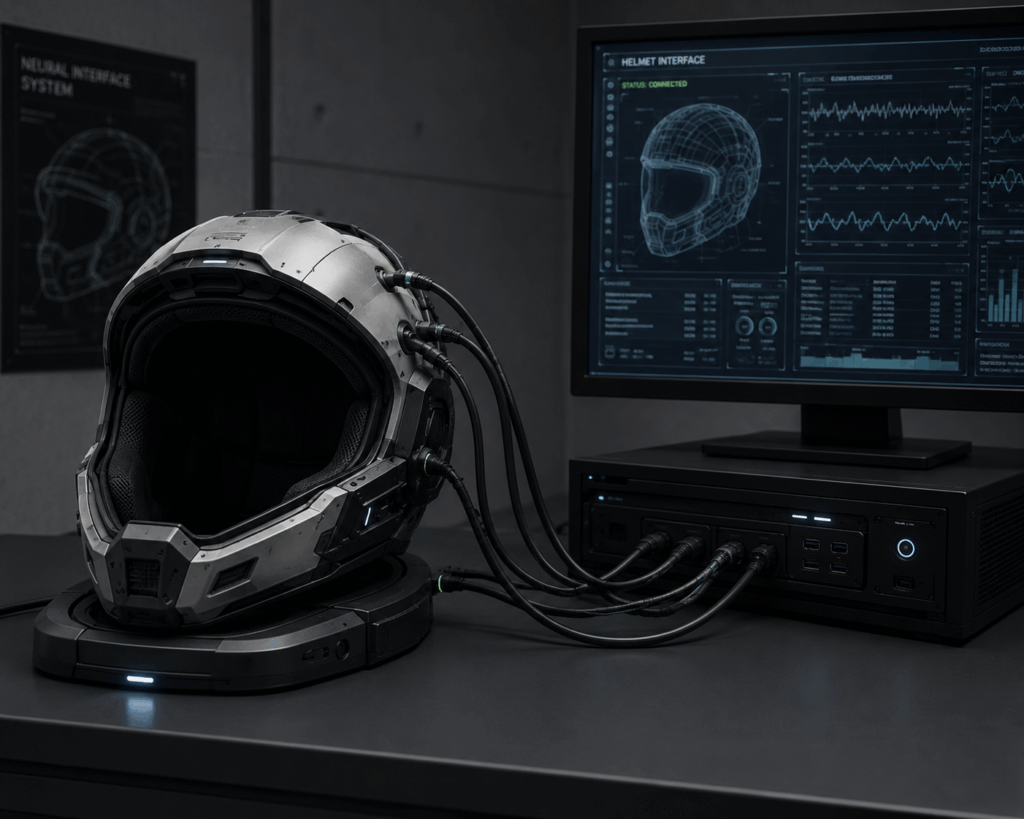
Welcome to part two in a series where we analyze the current state and future effects of AI on the music industry. Brought to you by Brian Camelio, founder of ArtistShare, widely recognized as the first crowdfunding platform and an early pioneer of today’s creator economy, and Camelio Group consulting.
Outsourcing Our Intelligence™
We are entering a period in history where it is more efficient to have machines think for us. In fact, it is no longer optional. It is becoming the default at an incredible speed. The question is not whether A.I. will be adopted. The question is what its effects will be.
A.I. isn’t the event. Its effects are.
Disruptive technologies don’t create change in a straight line. They create vacuums. When file-sharing emerged in the early 2000s, the immediate reaction in the music industry was panic. Revenue collapsed, business models broke, and entire segments disappeared. I had a ringside seat to that one.
But the real shift wasn’t file-sharing technology itself. It was what followed. A vacuum formed, and in that vacuum, new models emerged, some reactive, some durable. The ones that endured were built around what the technology could not replace. I’ve noticed that pattern is consistent across every major disruption.
The Vacuum Pattern
This type of pattern extends beyond music. Let’s look back to one of the major ones. For most of human history, physical labor was unavoidable. We moved, lifted, built, and carried as part of daily life. There was no other option. During the industrial revolution machines largely took over that work for us.
The result was increased convenience. But it also created a vacuum. Our bodies, which had been largely designed for physical work, no longer received the activity they were built for. Out of that vacuum came an entirely new ecosystem: gyms, fitness programs, personal training, and wellness industries. The “work” didn’t disappear. It changed form.
The same pattern is now emerging with intelligence vs. physical labor.
Outsourcing Intelligence
Artificial intelligence is not just automating tasks. It is externalizing cognition, or as I like to put it, allowing us to outsource our intelligence. Writing, analyzing, composing, and coding are functions that once required time, effort, and skill that are now accessible instantly.
The gains are pretty obvious: efficiency, expanded capability, accelerated learning, etc. But with vacuum patterns every gain creates a corresponding loss. When intelligence is outsourced, the other things begin to erode such as individual perspective, critical thinking, creativity, and judgment developed through experience. These are maybe not immediate losses, but they will most definitely compound over time.
What Becomes Scarce?
Disruptive technology many times increases supply. When supply increases, value shifts. In a world where creative output can be generated at scale, the scarce elements no longer become the outputs themselves.
The scarce elements when it comes to AI are human process, authentic relationships, and embodied judgment. These elements are not easily automated, replicated, or distributed. These elements are developed over time, through experience, context, and interaction with others. As artificial output increases, these human elements become more valuable, not less.
A Pattern We’ve Seen Before
We’ve already seen this play out. During the collapse of the traditional music industry, one assumption dominated: that the product had lost its value. Well, that assumption was wrong.
What had lost value was distribution scarcity. Technology whacked that piñata and the candy was everywhere. What remained valuable and became even more valuable was the relationship between artists and their audiences which thrived through the ability to now share the creative process with them, instantly and worldwide. The models that thrived were built on that foundation, independent of the technology itself. The technology became a valuable tool to those that embraced this brave new world.
Strategic Implication
When disruption occurs, it is generally wise to ask this simple strategic question: where is the new scarcity? Those who focus only on adopting the technology compete in the same crowded space. Those who identify the vacuum and build around what cannot be replaced define the next model and many times become future proof.
Navigating the Shift
That leads us to a set of principles that ring true across almost every major transition. Adopt the tools early. Avoiding them does not preserve your advantage; it removes it. Lean into what is difficult to automate. Things such as your identity, taste, judgment, and authentic connection with others. Build relationships, don’t just output. Outputs scale; relationships compound. Own your process. This is an important one. When anyone can generate results, how you think and create becomes the differentiator.
The Real Choice
Artificial intelligence will continue to advance. Its capabilities will expand. Its adoption will deepen. That is not the variable.
The variable is how individuals and organizations position themselves relative to it. Technology replaces the generic. It amplifies the distinctive. That has not changed.
The Bottom Line
We have seen this pattern before. Disruption creates a vacuum. The vacuum reveals what is irreplaceable. Those who build while focused on that reality don’t just adapt; they define what comes next.
The question is not whether intelligence will be outsourced.
It is whether you will discover what cannot be.